Drywall texture removal can make a room feel brighter, cleaner, and more current. Yet texture removal is rarely as simple as applying water and scraping. The right method depends on the ceiling texture, the condition of the drywall, and the intended finish. Before beginning popcorn removal or ceiling removal, have older popcorn ceiling materials tested for asbestos. Painted popcorn and unpainted popcorn often call for different approaches.
On some ceilings, covering the texture with a skim coat or ceiling skim is a wiser option than attempting to scrape popcorn. Scraping can cause damage, particularly to damaged drywall or the face paper beneath the surface. Consider whether the work will require drywall repair, repair work, paint, painting, or a fresh coat after removal. A qualified professional can help you decide whether to remove popcorn, manage removing popcorn, or select a smoother popcorn texture solution for your project.
Drywall texture removal can refresh a dated ceiling, but the best approach depends on the texture type, ceiling condition, safety concerns, and desired finish. Before scraping, inspect for damage and test older materials for asbestos or lead when appropriate. Careful containment, controlled removal, drywall repairs, skim coating, sanding, priming, and painting are all essential to achieving a clean, smooth, professional-looking result.
At MrWalls Drywall & Painting, drywall texture removal is a finish-restoration project, not simply a scraping job. Popcorn and other ceiling texture can make a room feel dated, collect dust, and draw attention to drywall repair. Whether you need popcorn removal or want to remove popcorn from one room or throughout the home, our professional team prepares ceilings for a clean, even finish.
We begin by inspecting the ceiling, ceiling texture, and surrounding drywall. Our assessment includes water damage, cracking, loose tape, previous patchwork, and damaged drywall. Older popcorn ceiling texture, including unpainted popcorn or painted popcorn, may require asbestos testing before ceiling removal begins. We do not disturb questionable materials until appropriate testing and safety steps are complete.
Next, we protect the work area with thorough covering for floors and furnishings, dust containment, and careful preparation for controlled texture removal. Depending on the material, removal may involve dampening and scraping, sanding, or both. We take care to scrape popcorn without creating unnecessary damage to the drywall, including the face paper beneath the texture.
After removing popcorn, the finish work begins. We repair gouges, seams, nail pops, and other imperfect areas, then apply joint compound as needed to level the surface, often with a skim coat or ceiling skim. Each coat is sanded with care, primed, and prepared for the finish you choose: a smooth ceiling or a lighter, updated texture. If your project involves popcorn ceilings, painted surfaces, or drywall texture removal, we can assess the work, explain the best approach, and complete the repair through final paint-ready preparation.
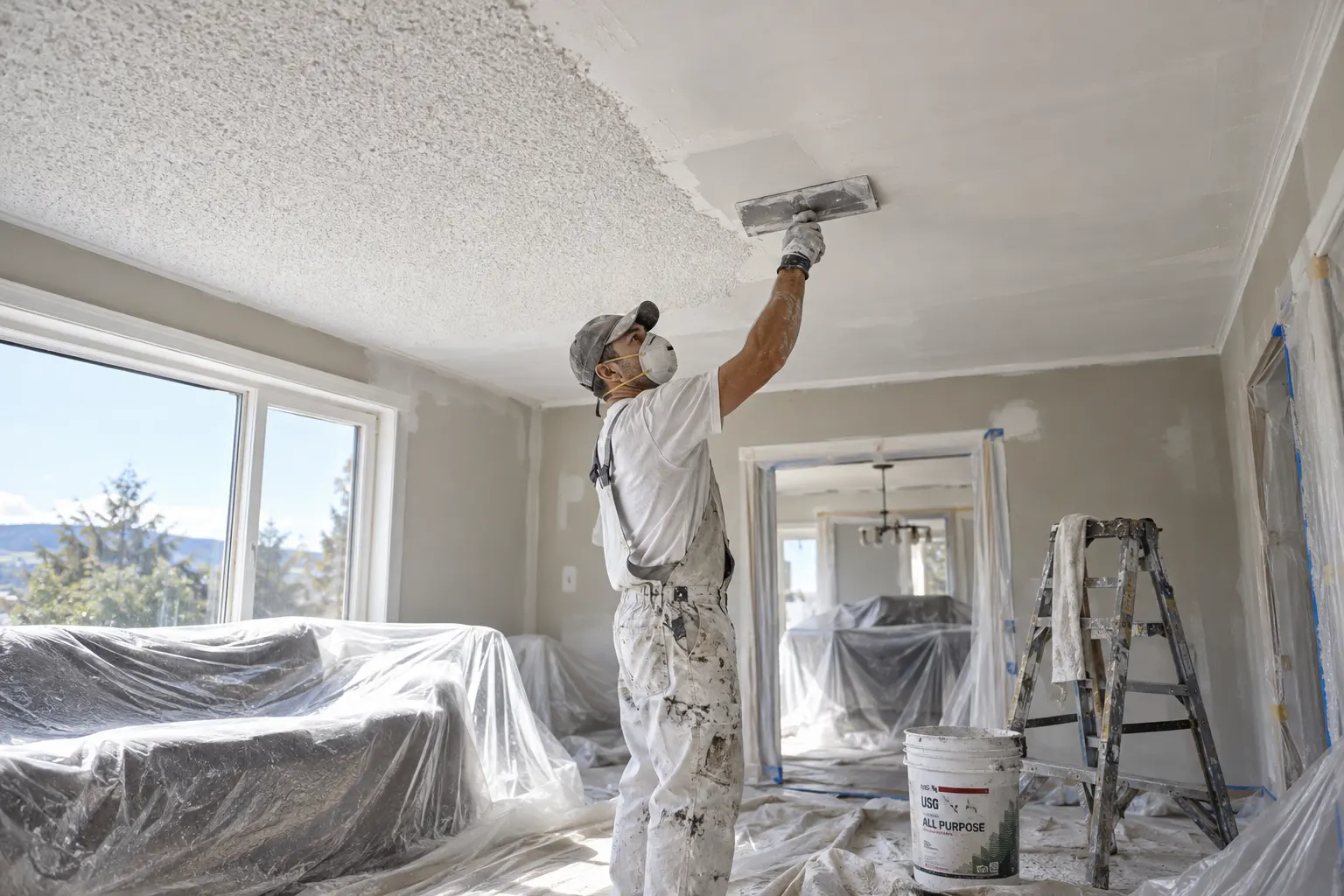
Textured ceilings are not automatically a problem; the right decision begins with a clear assessment of the ceiling itself. Before any project, a professional checks for asbestos, water damage, damaged drywall, loose face paper, and evidence of previous paint or painting. We also determine whether the surface is painted popcorn, unpainted popcorn, popcorn texture, or another type of ceiling texture. For isolated damage, drywall repair and a precise repair may be all that is needed. For a more substantial update, options can include covering the ceiling with drywall, ceiling skim work, or a smooth skim coat and finish. Ceiling removal, drywall texture removal, texture removal, popcorn removal, and popcorn ceiling removal can create a clean, contemporary result, but removing popcorn or scraping can also damage the surface. We only scrape popcorn or remove popcorn when it is the best choice for the home. The ideal approach for popcorn ceilings depends on the condition of the ceilings, room height, budget, and the finish you want. At MrWalls Drywall & Painting, we begin with the least disruptive solution, whether that means repair, removal, covering, or a fresh coat of paint.
Ceiling removal is often the clearest path when a popcorn ceiling is loose, heavily patched, stained, or marked by water damage. It is also the right choice when painted popcorn, unpainted popcorn, or older popcorn texture cannot support the finish you have in mind. Removing popcorn delivers the cleanest surface, though the work is dusty and labor-intensive. Before you remove or begin scraping pre-1980s ceilings, arrange professional testing. Some ceiling texture materials may contain asbestos and require specialized handling.
A ceiling skim or skim coat can be the more refined option when the existing texture is sound and firmly bonded. Rather than scraping to bare drywall, we seal the surface where needed, apply a controlled coat, and sand it to a smooth, consistent finish. This approach can help prevent damage to the drywall and protect the face paper. In other situations, covering the ceiling with new drywall offers a more predictable result, particularly when damaged drywall, deep cracks, or old repair work may telegraph through.
I assess every project in person, considering adhesion, moisture history, framing movement, lighting, and the way the room is used. For homeowners considering popcorn removal, drywall texture removal, or texture removal, I can explain when to scrape popcorn, when to skim, and where drywall repair may be needed. If you prefer to hand it off, MrWalls Drywall & Painting can manage containment, ceiling removal, a ceiling skim, repair work, priming, paint, and final paint-ready finishing.
| Finish path | Best fit | Key considerations |
|---|---|---|
| Ceiling removal | Loose texture, poor patching, stains beyond reliable repair, post 1980 home with unpainted texture | Creates a clean starting point but is the messiest up front. Pre-1980s textured ceilings should be professionally tested before disturbance. not available for heavily painted texture |
| Skim coating | Sound, firmly bonded texture, light to medium texture. | The surface may be sealed, coated in a controlled manner, and sanded between applications to create a level finish. |
| Covering with new drywall | Heavy texture painted many times, pre 1980 home, peeling issues. | Can be more predictable than removal or skim coating in some rooms. |
Before removing popcorn, inspect the popcorn ceiling for staining, cracks, loose areas, and signs of prior repairs. Water damage, damaged drywall, or failing paint can quickly shift a straightforward texture removal into a more involved ceiling repair project. Determine whether the surface has been painted as well: painted popcorn responds differently to water, wetting, and scraping. At MrWalls Drywall & Painting, we begin with the ceiling’s actual condition, not assumptions.
Older popcorn texture deserves a deliberate pause before scraping begins. Some popcorn ceilings installed before the mid-1980s may contain asbestos, and appearance alone cannot confirm its presence. When a home’s age or renovation history raises questions, arrange professional laboratory testing before disturbing the ceiling texture. Never sand, scrape popcorn, drill, or apply water to a suspect popcorn ceiling while awaiting results.
Painted popcorn requires a different approach. Unlike unpainted popcorn, a painted surface may resist moisture, release unevenly, or pull the face paper from the drywall below. The resulting damage can leave damaged drywall in need of drywall repair, a skim coat, or a full ceiling skim before the final finish. In homes built before 1978, paint may also contain lead. Testing is a prudent step whenever a project involves dust, damage, texture removal, drywall texture removal, popcorn removal, or removing popcorn. It also clarifies whether to remove popcorn or preserve the existing covering with a fresh coat of paint.
When ceiling removal or popcorn removal is appropriate, thoughtful containment is essential. We protect floors, isolate the work area with plastic, cover registers, and use controlled wet methods to limit dust. We also recommend stopping HVAC movement in the work zone and keeping children, pets, and occupants away until cleanup is complete. For homeowners who prefer not to manage the mess or risk of ceiling texture removal, MrWalls Drywall & Painting can assess the ceilings, coordinate testing, and handle removal, repair, painting, or a smooth skim finish with professional care.
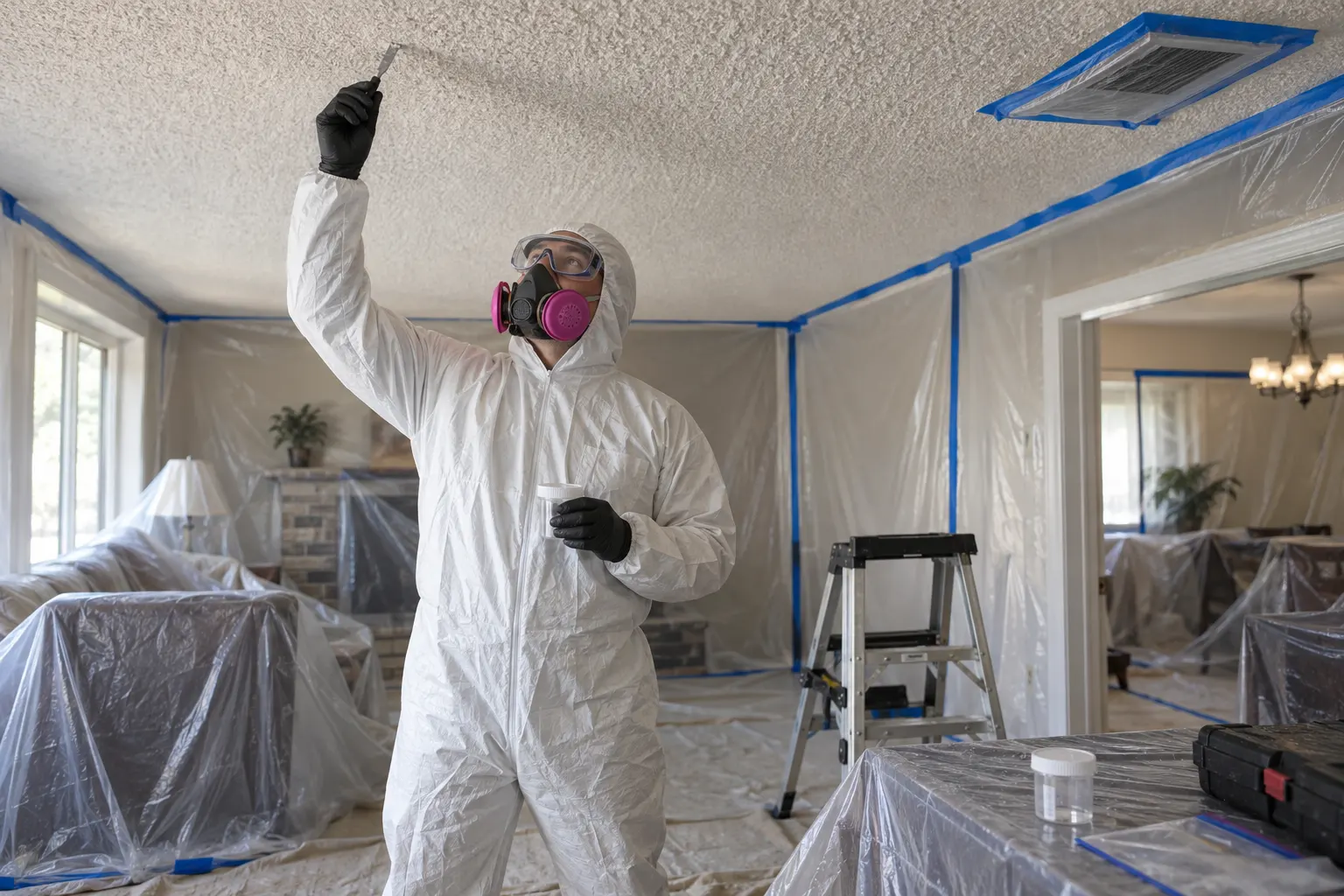
Before texture removal begins, we treat preparation as an essential part of the repair, not an afterthought. Popcorn ceiling work can be messy, and disciplined containment protects floors, walls, furnishings, and the HVAC system throughout the project. At MrWalls Drywall & Painting, we clear smaller items, position remaining furniture at the center of the room, and provide thorough covering. Floors receive durable paper or plastic protection, while walls, trim, doorways, registers, and light fixtures are sealed as needed. For older ceilings, we recommend appropriate asbestos testing before disturbing popcorn texture or beginning popcorn removal.
Water can gently soften painted popcorn or unpainted popcorn before scraping. The difference is control: too much moisture may soften the drywall face paper, create staining, or reveal existing ceiling repair concerns. We work in manageable sections, applying only enough water to release the texture without saturating the drywall beneath it. Whether the scope calls for drywall texture removal, ceiling removal, or a plan to remove popcorn and scrape popcorn cleanly, careful technique helps prevent damage to the ceiling.
Thoughtful preparation also anticipates the finish after removing popcorn. Once popcorn ceilings are exposed, imperfections, old patches, nail pops, joint lines, damaged drywall, and other areas of damage can become more visible. We inspect the drywall, complete any necessary drywall repair, and maintain containment during sanding, priming, painting, and paint preparation. When a ceiling skim or skim coat is needed, we apply each coat with care to create a refined finish. Homeowners who prefer a professional team to manage the covering, wet scraping, cleanup, repair, and finish work can rely on us for polished popcorn ceiling removal from start to finish.
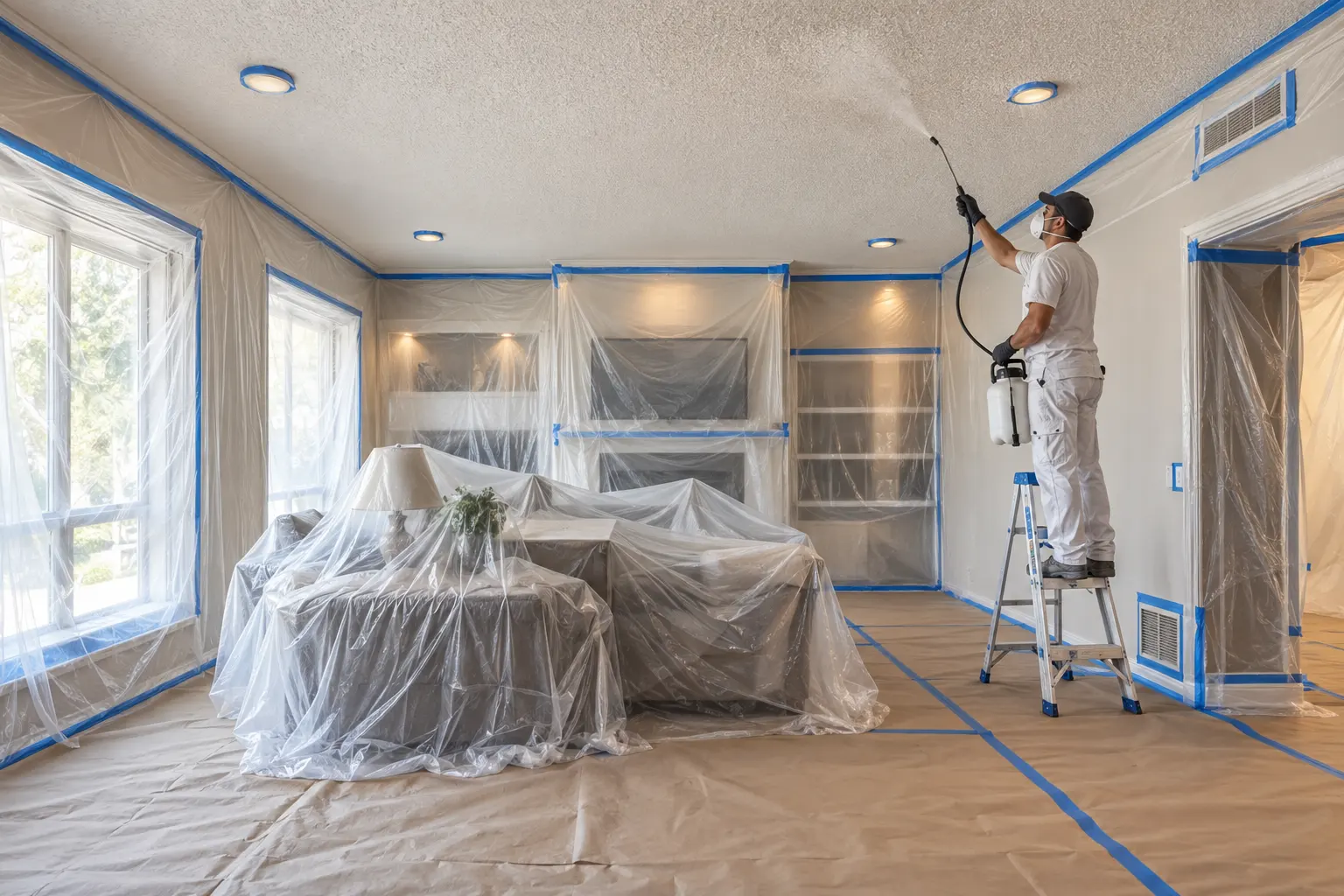
Every project begins with a close evaluation of the ceiling’s condition. We examine the ceiling texture, paint coat, covering, adhesion, and visible damage before recommending the right texture removal approach. Unpainted popcorn may respond to water and careful scraping, while painted popcorn or a painted popcorn ceiling typically calls for a more measured method. Before we scrape popcorn, remove popcorn, or begin popcorn removal, we inspect for asbestos, damaged drywall, loose face paper, and other repair requirements. Our professional process may include drywall texture removal, drywall repair, ceiling removal, a ceiling skim, skim coat, or a refined new finish, guided by the popcorn texture and overall condition of the ceilings. Whether you are removing popcorn from popcorn ceilings or preparing for painting after removal, we protect the drywall and deliver a clean, dependable result.
MrWalls Drywall & Painting has been removing popcorn ceilings since 2001. Not every ceiling texture responds to removal in the same way. Popcorn texture, particularly on older popcorn ceilings, is often the most labor-intensive: thick, uneven, and sometimes concealing old repair work beneath the surface. Before any ceiling removal project, a professional should determine whether asbestos testing is needed. With unpainted popcorn, I apply a light, even misting of water to soften the material, then scrape popcorn in manageable sections with broad drywall knives. The aim is to remove popcorn without harming the drywall or its face paper. Careful scraping keeps popcorn removal cleaner and helps prevent unnecessary damage when removing popcorn from a popcorn ceiling.
Painted popcorn is less predictable. Paint and previous painting can form a hard shell that prevents moisture from reaching the texture below. Aggressive wet scraping may damage the ceiling face or leave damaged drywall behind. In these cases, I assess whether controlled dry drywall texture removal, a ceiling skim, or selective ceiling repair will produce the best finish. A skim coat can provide a smooth, durable covering when full texture removal is likely to create more damage. When needed, I also recommend drywall repair before the final coat.
Orange peel and knockdown texture are typically thinner than popcorn, but their removal still calls for care. Orange peel may be sanded or skimmed, depending on its height and the condition of the ceiling. Knockdown can often be flattened with a skim coat when complete removal would disturb sound drywall. Before recommending a method, I inspect ceilings for loose areas, patchwork, staining, cracks, and other signs of damage. Every project is different, but a refined smooth finish begins with repairing the surface underneath as carefully as the visible texture.
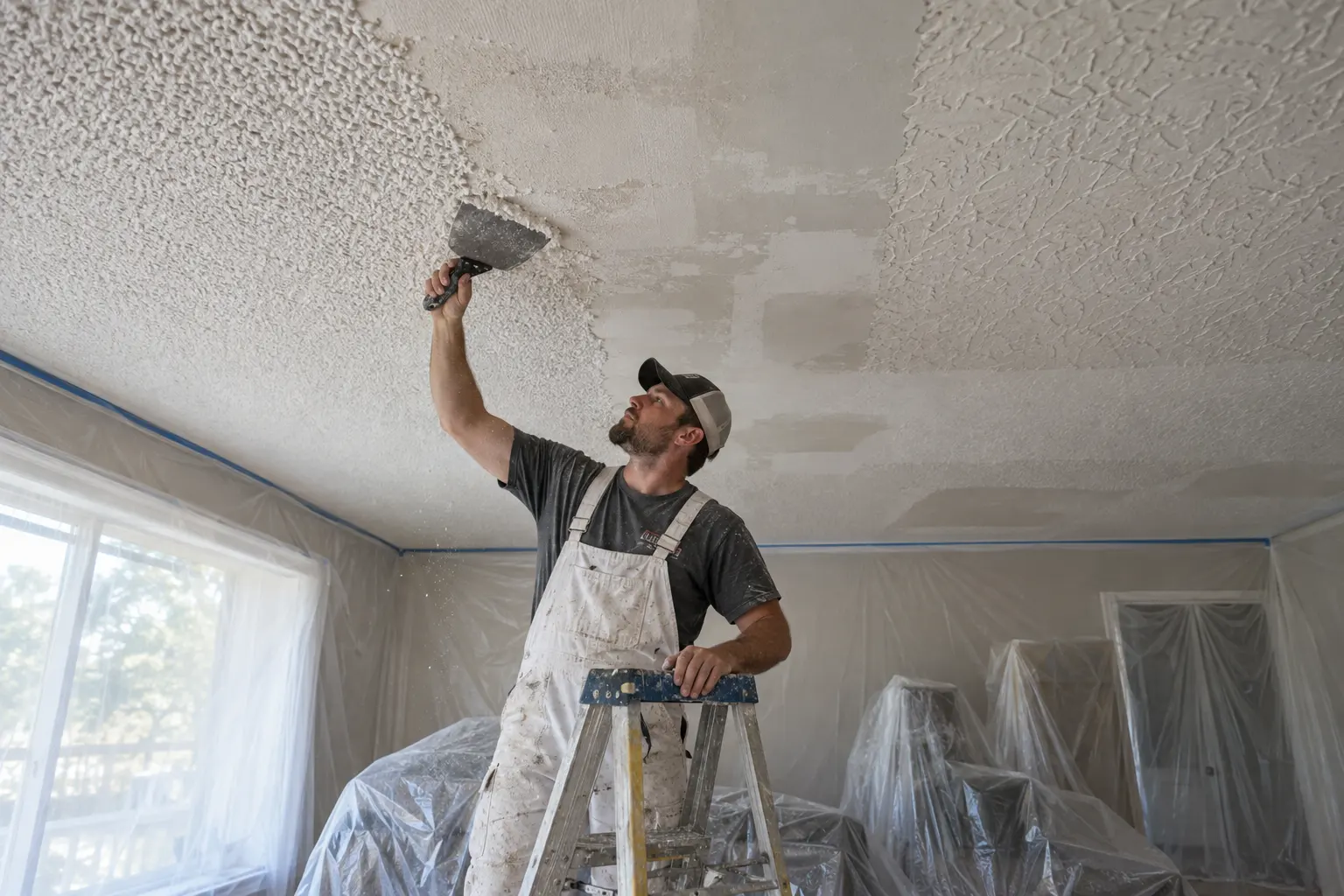
Once popcorn texture removal is done, the true condition of the ceiling comes into focus. Popcorn removal, ceiling removal, and drywall texture removal can uncover old patches, torn face paper, loose tape, nail pops, and uneven joints. Whether you remove popcorn from a painted popcorn ceiling or scrape popcorn from unpainted popcorn, a paint-ready finish begins with meticulous drywall repair. The same care applies across popcorn ceilings of every age and condition.
Our process starts with a detailed inspection under strong, even lighting. Small gouges may need a skim coat, while damaged drywall with softened paper, cracks, water damage, or failed seams calls for a more complete repair. We seal torn face paper before applying compound, remove loose material, reset fasteners, and retape compromised joints rather than simply covering them. If asbestos is a concern, stop work and contact a professional before removing popcorn or scraping the ceiling texture.
Next, we skim the surface in thin, controlled coats. A ceiling skim blends repairs seamlessly and removes the faint ridges left after texture removal. Each coat needs adequate drying time before sanding. Sanding should refine the finish, not damage the drywall beneath it. This preparation is especially important on a ceiling exposed to strong window light or recessed lighting.
Before painting, we prime repaired areas so paint absorbs evenly. Skipping primer can leave flashing, dull patches, or visible repair lines after the ceiling is painted. At MrWalls Drywall & Painting, we manage the full project, from popcorn ceiling removal and texture removal through final paint. We can also step in when removing popcorn reveals more damage than expected. The goal is straightforward: a smooth, durable ceiling with a clean finish from every angle.
At MrWalls Drywall & Painting, I help homeowners weigh this decision every week: should you take on drywall texture removal yourself, or bring in a professional? The right answer has less to do with room size than with the condition of the ceiling, the age of the home, and the level of finish you expect when the work is complete.
In a small, newer room with a lightly applied popcorn finish, a DIY project can be realistic. Begin by protecting floors and walls, then test a small area. Use water to soften the texture without saturating the drywall, and scrape in steady, controlled passes. Be prepared for slow, messy, physically demanding work, particularly on ceilings. Scraping is only the beginning; most ceilings require patching, skim coating, sanding, priming, and repainting to achieve a clean, even finish.
Ceiling removal becomes considerably more involved when there is existing damage, previous patchwork, loose tape, stains, or several layers of paint. Aggressive scraping can tear the drywall paper, expose seams, and turn a straightforward update into a larger drywall repair. Older popcorn ceilings deserve particular care: materials installed before the mid-1980s may require asbestos testing before anyone disturbs them.
When homeowners hire us, we manage containment, surface preparation, repair, and finishing as one coordinated process. A professional crew can also assess whether removal is the best option or whether a skim coat over a sound surface will produce a better result. For a flat, paint-ready ceiling without uncertainty around hidden repairs, professional drywall texture removal is often the more dependable investment.
At MrWalls Drywall & Painting, we look beyond the square footage of your ceiling. Every drywall texture removal project has its own conditions and requirements. A professional estimate for texture removal or ceiling removal considers the existing ceiling texture, the condition of the drywall, room access, and the finish you want when the work is complete. If there is a concern about asbestos, we recommend appropriate testing before popcorn removal begins.
A light, unpainted popcorn covering over sound drywall may be more straightforward to remove with controlled wet scraping and modest preparation. Painted texture can require additional labor, specialized sanding, or a different method. As we remove popcorn or scrape popcorn, we may uncover damage, water staining, patchwork, loose seams, nail pops, or damaged face paper. These conditions require repair before the new finish can be applied.
Room layout also shapes the scope of the work. High ceilings, stairwells, built-in cabinetry, occupied rooms, and extensive furniture protection all add meaningful setup time. Removing popcorn creates dust and demands careful overhead work, so we plan each project to protect your home while completing the removal efficiently.
The final finish matters as much as the scraping itself. Some homeowners want a clean, paint-ready surface with a subtle texture. Others prefer a smooth ceiling skim or a Level 5-style result. The smoother the finish, the more exacting the skim work, skim coat application, sanding, priming, and paint preparation must be. A quality coat of primer also creates a more consistent surface before painting.
When we prepare an estimate, we identify these conditions upfront so you understand exactly what the work includes. Whether you need drywall repair, popcorn ceiling repair, or a full popcorn ceilings project, our goal is to make removing popcorn feel straightforward and deliver a durable result that looks intentional in every light.
Before you hire a professional for texture removal, ask focused, practical questions about the project. A trusted contractor should clearly assess your ceiling, outline the ceiling removal process, and explain whether drywall texture removal is the right solution. At MrWalls Drywall & Painting, we believe homeowners deserve confidence in their choice, not simply the lowest estimate.
Begin with testing, protection, and preparation. Older popcorn ceilings, including unpainted popcorn and painted popcorn, may require asbestos testing before removal begins. Ask how the team will protect floors, walls, furniture, vents, and adjacent rooms while scraping or removing popcorn. They should also explain whether they will scrape popcorn, remove popcorn, or use covering to address the popcorn texture, along with how they will control dust throughout popcorn removal.
Then ask what lies beneath the ceiling texture. Damaged drywall, water stains, loose tape, cracks, face paper damage, and other damage require careful drywall repair before a new finish is applied. A contractor should explain whether a ceiling skim or skim coat is necessary, how many times they will skim the surface, and which coat and finish they recommend. Thorough preparation helps ensure the ceiling is smooth, primed, painted, and ready for paint.
Finally, request a written scope, timeline, and warranty details. Confirm that the price includes removal, repair, cleanup, materials, and painting. Clear answers about ceilings, drywall, texture, and the final finish are strong signs that the contractor is prepared to deliver lasting results.
Homeowners often ask whether drywall texture removal is a realistic DIY project or work best left to a professional. The right answer depends on the texture, the age and condition of the ceiling, and the finish you want afterward. At MrWalls Drywall & Painting, we assess the ceiling texture and any existing covering before recommending a clear, practical repair plan.
Can a popcorn ceiling be removed safely? In many homes, yes. However, older popcorn ceilings may contain asbestos. Popcorn texture installed before the mid-1980s should be tested by a qualified laboratory before sanding, scraping, drilling, or other removal work begins. We do not disturb suspect material until testing provides a clear answer. If asbestos is present, a licensed abatement professional should handle popcorn removal and ceiling removal. This precaution is especially important when you remove popcorn, scrape popcorn, or begin removing popcorn from unpainted popcorn ceilings.
What if the texture has been painted? A painted popcorn ceiling can be more difficult to remove because water may not soften it evenly. Aggressive scraping can damage the drywall face paper, expose seams, or leave damaged drywall behind. Depending on the ceiling’s condition, we may carefully remove the texture, complete drywall repair, repair damaged areas, or apply a skim coat over a stable painted surface. A ceiling skim or full skim coat creates a smooth, paint-ready finish before painting.
Will removal make a mess? It can, which is why thoughtful preparation matters. We protect floors, walls, furnishings, vents, and adjacent rooms, then control dust throughout the drywall texture removal process. After texture removal, we address joints, nail pops, cracks, and uneven areas before primer and paint. Our goal is a refined finish with minimal disruption to your home.
For homeowners who want a clean result without trial and error, our team can inspect the ceiling and provide a practical recommendation for removal, repair, and finishing. Whether your ceilings need popcorn ceiling removal, painted popcorn repair, or a smooth new coat, we can help you choose the right approach.
It can be safe when the ceiling is evaluated first and proper containment is used. Homes with ceilings installed before the mid-1980s should have suspect texture professionally tested for asbestos before scraping, sanding, drilling, or wetting the surface. Paint in pre-1978 homes may also warrant lead testing.
Removal is often appropriate when the texture is loose, stained, heavily patched, or incompatible with the finish you want. A skim coat can be a better choice when the texture is sound and firmly bonded. Heavy texture, recurring cracks, or extensive past repairs may make new drywall the more predictable option.
Yes, but painted popcorn is more difficult than unpainted texture. Paint may block moisture, cause the texture to release unevenly, or pull the drywall paper during scraping. After inspection, the best approach may be controlled removal, a skim coat, or selective drywall repair.
Removing the texture often reveals seams, nail pops, gouges, cracks, and old patches. The ceiling is repaired with joint compound as needed, sanded to level the surface, primed, and prepared for a smooth ceiling finish, updated light texture, or final paint.
The work area should be contained with protected floors, covered furniture, sealed doorways and registers, and controlled work methods. HVAC movement in the work zone should be stopped, and occupants, children, and pets should remain away until cleanup is complete.
Yes. Orange peel and knockdown are usually thinner than popcorn, but the right method depends on adhesion, paint, texture height, and drywall condition. Sanding, flattening with a skim coat, or targeted repairs may provide a cleaner finish than full removal.